COMTE ON ORDER AND PROGRESS

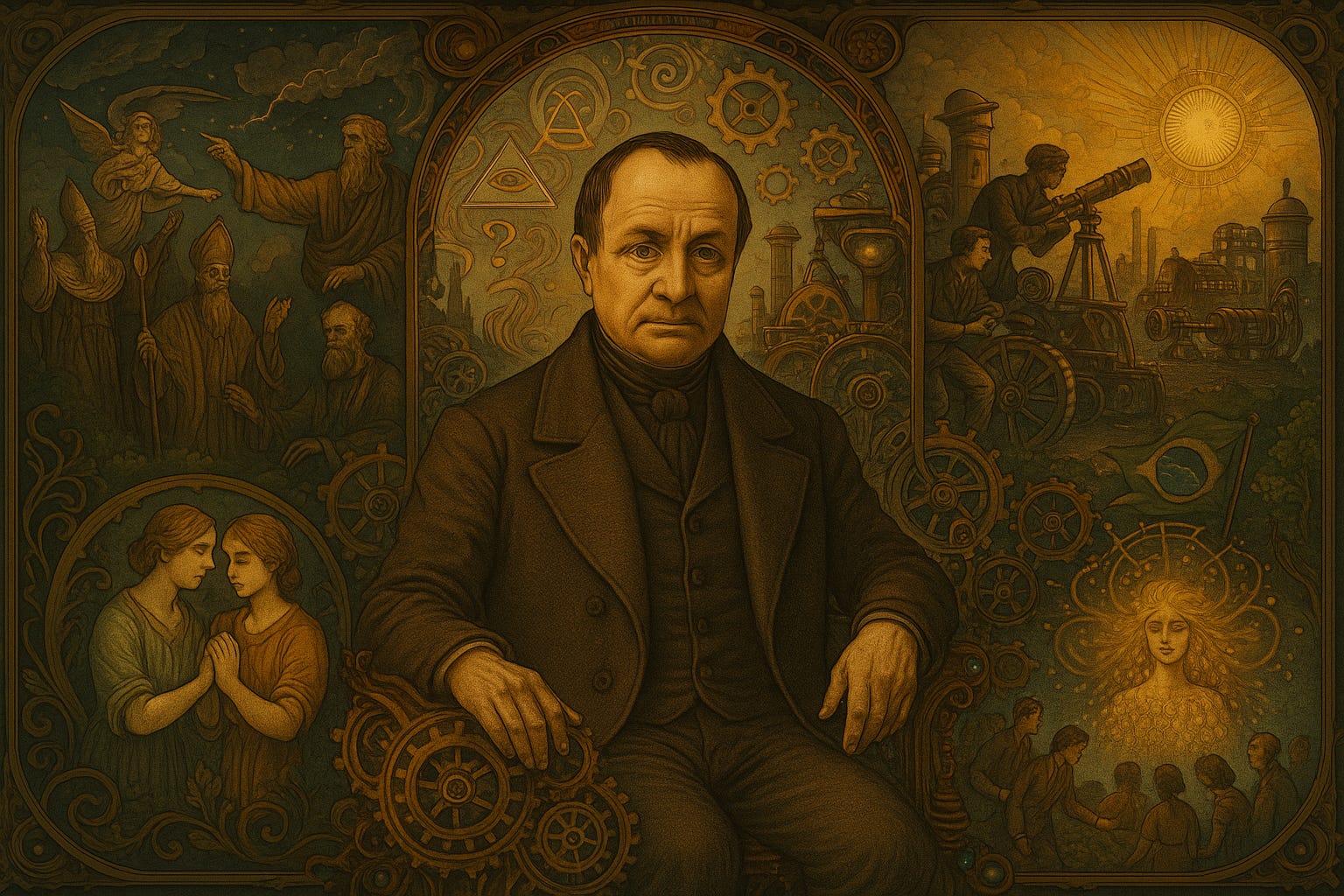
The philosophy of Auguste Comte (1798–1857) emerges as both a diagnosis of history and a prescription for the future, as if he sought to codify the very laws by which human thought unfolds across time. In his “law of three stages” – the theological, the metaphysical, and the positive – we encounter nothing less than a phenomenology of the human spirit, a progressive transfiguration of consciousness itself. Humanity first projected its ignorance onto the heavens, peopling the firmament with gods and spirits; then it sought to mediate the enigma of existence through abstractions and metaphysical essences; and finally, in the positive stage, it grounded its gaze in empirical observation and systematic science, building the edifice of knowledge upon the foundation of what can be verified and tested.
Keep reading with a 7-day free trial
Subscribe to Jason Jorjani to keep reading this post and get 7 days of free access to the full post archives.